
Putin Has a Problem in Crimea
The crown jewel of Russia's war against Ukraine has become its weakness

I do not have a paywall today; I’m giving away this post for free because I want it to reach a wide audience. You can read this site for a week or a month or six months, to see if you like it. If you do—if you think this is a worthwhile place, and you would like to help it survive—I ask that you take a moment to become a paid subscriber yourself, which annually costs just $1.34 per week. Cheap!
After Moscow invaded and annexed Crimea in March 2014, Russia experienced a wave of national pride. Supporters of the annexation cried “Krymnash!“ which translates to “Crimea is ours!” However, the Russian internet had other ideas. On social media platforms like Twitter, Krymnash became an ironic meme. Internet users used Krymnash to call attention to the fact that the annexation was a patriotic sugarhigh that papered over a poor standard of living for ordinary Russians: for example, a Twitter user might call attention to the fact that the bathrooms didn’t work in a provincial school, but add the hashtag #krymnash -- Crimea is ours!
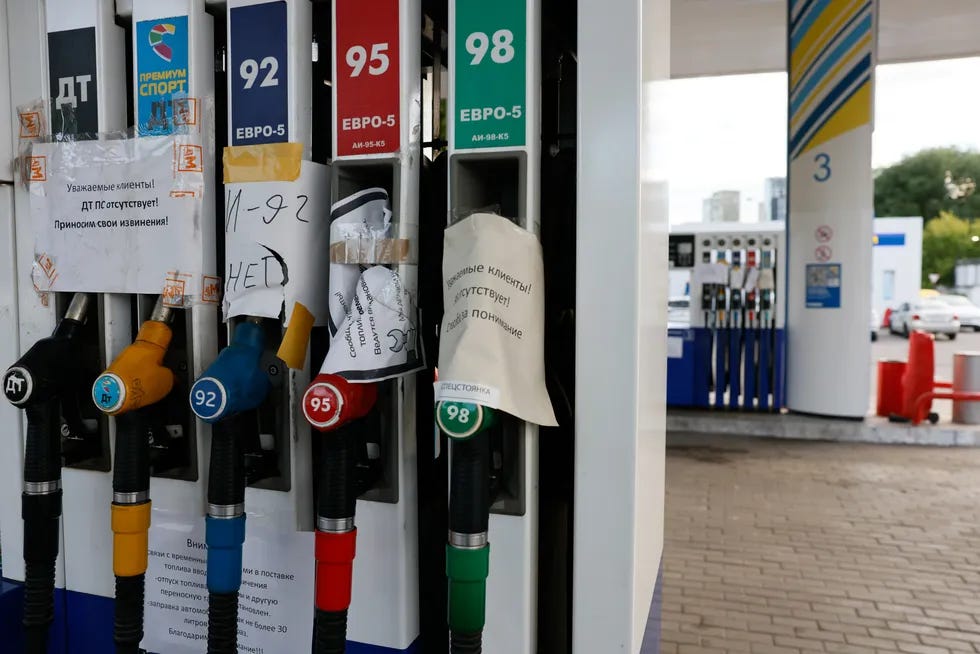
Twelve years later, Crimea is still controlled by Russia, but severe variants of the kinds of infrastructure problems that bloggers were drawing attention to in mainland Russia have come to the peninsula because of long-range aerial strikes by Ukraine. On June 26, Crimea’s governor declared a state of emergency in the peninsula. Fuel is no longer for sale. Public transit has partially stopped. Blackouts last days. Once a popular summer destination for Russians, yielding at least $60 million in annual tourism revenue, many beaches are empty. Social media users posted pictures of long traffic jams fleeing Crimea for mainland Russia on the Kerch Bridge -- the long-awaited infrastructure project that was completed in 2018.
Crimea is the crown jewel of Putin’s war against Ukraine: a Russian-speaking province that Russian forces took over without a shot and imposed a police state. In 2014, Ukraine’s army was too weak to respond to the Crimean takeover, and instead concentrated its forces in the East, where Putin launched an offensive to retake the Ukrainian territories of Donetsk and Luhansk. When Russia launched its full-scale invasion of Ukraine in 2022, Russia used Crimea as a staging ground to quickly take territory in parts of Southern and Eastern Ukraine, establishing a land bridge with its occupied territories in Donetsk and Luhansk. Since 2022, the Russian military has repurposed civilian hospitals for troops and used the peninsula as a logistics hub to store weapons.
Once a military advantage, Ukraine has turned Crimea into a military liability. Now, Moscow has to deploy scarce resources to try to protect the peninsula. Ukraine’s June 18 large-scale attack on Moscow showed how Kyiv has improved its mid-range drone technology and Russia is running out of air defense systems. According to Ukrainian President Volodymyr Zelenskyy, Putin has moved air defenses to protect his residences as well as the Kerch Bridge, which Ukrainian forces have attacked and temporarily disabled before, but have not been able to permanently destroy. Ukraine has been able to thwart Russia’s air defenses to successfully attack power stations, fuel supplies, bridges, and weapons convoys in Crimea.
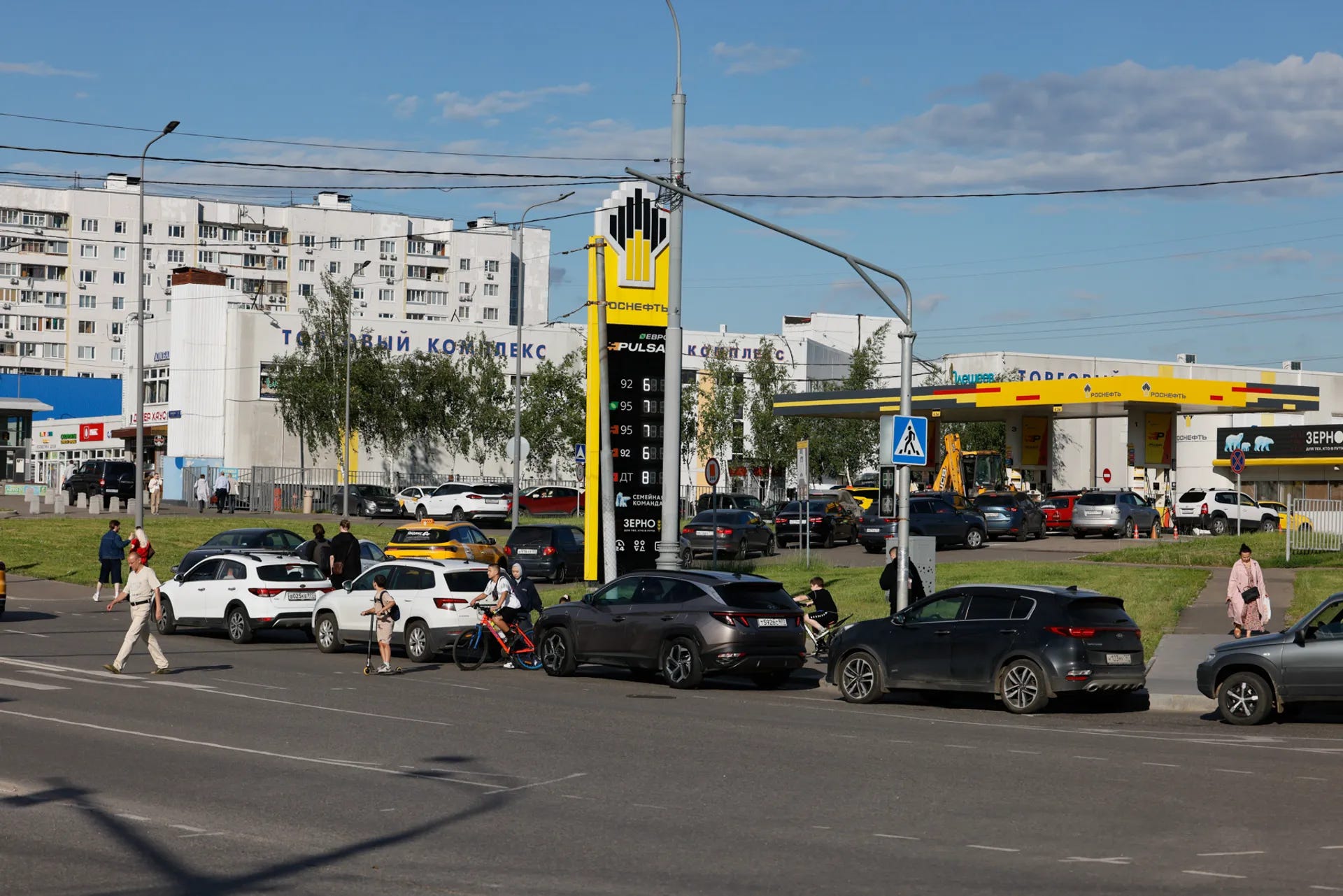
Russia’s weaknesses extend beyond Crimea. Ukraine is targeting Russian oil refineries hundreds of miles from the front line, leading to fuel restrictions in at least 56 of Russia’s 89 regions. Russia, an oil exporter, has been forced to import gasoline for the first time in years, according to Reuters.
Putin has limited options to respond to the Crimea campaign. He has rejected the idea that he should negotiate with Zelenskyy because of the Crimea strikes, calling them a distraction from Kyiv’s “catastrophic” shortage of troops in the East. There is some truth to this. The Kyiv Independent recently reported from the outskirts of the frontline town of Kostiantynivka in Ukraine’s “fortress belt” in the Donbas, where Kyiv faces a manpower shortage and Russians are successfully infiltrating the depopulated town. Of course, Russian troops have their own problems on the battlefield -- Russian military bloggers have said that Russians have an average life expectancy of 20 to 35 minutes when they arrive at the front -- but Putin is dug in.
So far, Ukraine’s recent advances in Crimea and the fuel shortages there do not threaten Putin’s control over Russia. Putin has severely restricted his travel, the number of people who see him is small, and he has a cadre of up to 400,000 soldiers who are personally loyal to him. A Russian veteran, Alexander Lunin, who recently made international headlines for his public campaign for a meeting with Putin about the situation at the front, has been arrested.
Still, Ukraine’s campaign for Crimea and strikes on Russian oil refineries are a new development in the war, and there is no telling where they might lead. Alexander Etkind, a historian of Russia, offered a prediction on Facebook: “The Russian invasion of Crimea in 2014 triggered the global crisis of trust and security, [which] led to Trump’s presidency in 2016, Brexit in 2020, new invasion of Ukraine in 2022, Gaza war in 2023, and Iran war in 2026. The retreat from Crimea will start the unwinding of the crisis.”
If you found this post useful, you can use the buttons below to share it!

4 Years Into the Ukraine War, the U.S. is Out

During his 2024 campaign, Donald Trump repeatedly promised to end the Russo-Ukrainian War in “24 hours.” Over a year in…
A Fly on the Wall to Russia's Fascist Indoctrination

A few weeks ago, I was talking with another journalist ab…