4 Years Into the Ukraine War, the U.S. is Out
Trump has no cards to play
During his 2024 campaign, Donald Trump repeatedly promised to end the Russo-Ukrainian War in “24 hours.” Over a year into his presidency -- and as the fourth anniversary of Russia’s full-scale invasion approaches on February 24 -- the war is still going on with no end in sight. One major reason is that the U.S. has halted funding Ukraine’s weapons buys, depriving Kyiv of sophisticated weaponry and giving Washington less leverage over how the war ends.
Beginning in 2022, U.S. President Joe Biden delivered military and humanitarian aid to Ukraine -- albeit too haltingly -- and rushed more out as he was preparing to leave office. But according to the Kiel Institute for the World Economy, U.S. support for Ukraine stopped in the second quarter of 2025 -- the first quarter that Trump was president for the entire period. European countries have filled the financial gap left by Washington and still buy U.S. weapons and send them to Ukraine. The message coming from Washington is clear: the Trump Administration is okay with U.S. weapons manufacturers making money off of the war, but it doesn’t want to contribute to the pot itself.
With Trump in office, Ukrainian President Volodymyr Zelenskyy’s attempts to secure more advanced American weapons have been fruitless. In October, he traveled to the White House to try to get long-range Tomahawk missiles. However, according to the Financial Times, this private meeting didn’t go well: Trump said that Putin would “destroy” Zelenskyy if he didn’t agree to a deal and tossed aside maps of the frontline in eastern Ukraine, reportedly saying, “This red line, I don’t even know where this is. I’ve never been there.” Zelenskyy traveled back to Kyiv empty-handed.
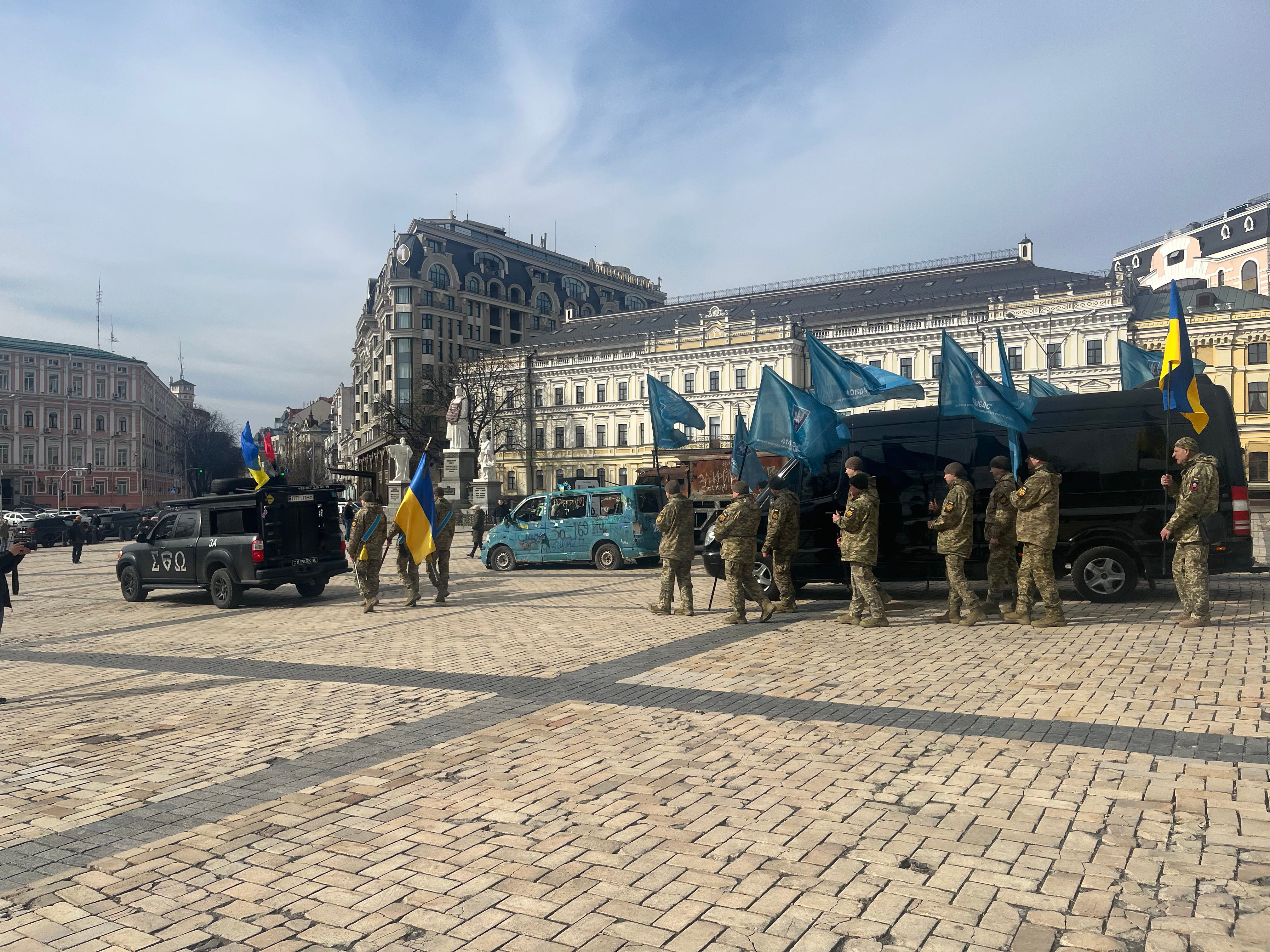
The October meeting was reminiscent of the February Oval Office upbraiding of Zelenskyy by Trump and Vice President JD Vance before television cameras. I was in Kyiv when that happened, and it struck me how irrelevant the U.S. had made itself by cutting off funding. The next day, a colleague told me about a protest outside the U.S. Embassy against Trump, but when I arrived, there were more journalists than the half-dozen protesters there, and most of the picketers were American. Ukrainians are fighting for their very existence as an independent state, and they still are going to fight regardless of what Trump says or does. On a trip the following September to Ukraine, I interviewed the Ukrainian writer Arterm Chapeye for the New Republic. He told me: “We do need support, but nobody’s playing the cards given by America, adding “Nobody gives a flying fuck about JD Vance’s opinion.”
Ukraine is doing the best it can without U.S. support; Washington does still provide intelligence support to Ukraine, but the Trump Administration briefly cut it off after the Oval Office meeting. It is surviving with European financial support (in doubt now because of Hungary’s block on a crucial €90 billion loan) and its homemade weapons industry.
Trump has shown no inclination to use the leverage he could gain to get Putin to end the war. If Trump were to send Tomahawks to Ukraine or slap tariffs on China for its purchases of Russian oil if Moscow didn’t agree to a ceasefire, then it might get Putin’s attention. But Trump backed down on sending Tomahawks after speaking with Putin. The Trump Administration punished India for its purchases of Russian oil, but the oil just flowed to China instead.
U.S.-made air-defense systems such as the Patriot are vital for protecting critical infrastructure, which has been hammered by Russian attacks during the coldest winter in years, leaving millions of Ukrainians without power, heat, and water for hours and days at a time. Ukraine is running low on supplies: Kyiv’s air force spokesman recently said that one joint U.S.-Norwegian air defense system was operating with two interceptor missiles instead of the usual six. Under U.S. Secretary of Defense Pete Hegseth, Washington has never chaired the meeting that the Biden Administration created to coordinate Western arms deliveries to Ukraine. Prior to this year’s Munich Security Conference, this group agreed to send $38 billion in arms to Ukraine, including air defense and a few increasingly scarce Patriot interceptors; no U.S. deliveries were announced. A few days later, U.S. Secretary of State Marco Rubio skipped a meeting in Munich with European allies on Ukraine, instead meeting bilaterally with Zelenskyy.
According to the U.N., Ukrainian civilian casualties increased by about 31 percent in 2025, the deadliest year since 2022, the year the full-scale invasion began. Ukrainian Nobel Prize Winner Oleksandra Matviichuk asked why this was the case in a Facebook post that has since gone viral: “Why did Putin not allow himself such brutal strikes on civilian infrastructure under Biden, whom Trump calls ‘weak,’ but totally destroys peaceful cities and disregards the ‘strong Trump’?”
You are reading Public Sphere, an independent publication which is 100% funded by readers just like you who choose to become paid subscribers. I do not have a paywall today. You can read this site for a week or a month or six months, to see if you like it. If you do—if you think this is a worthwhile place, and you would like to help it survive—I ask that you take a moment to become a paid subscriber yourself.
If you found this post useful, you can use the buttons below to share it: