
Why Zelenskyy Ousted Ukraine's Top General
Plus: Notes from my 8th visit to Ukraine since the full-scale invasion and reporting from the scene of a devastating airstrike

Dear Reader,
Ukraine’s Commander-in-Chief Oleksandr Syrskyi is out. On the evening of July 21, President Volodymyr Zelenskyy announced his dismissal and his replacement, General Mykhailo Drapatyi, who had been publicly supportive of ousted defense minister Mykhailo Fedorov.
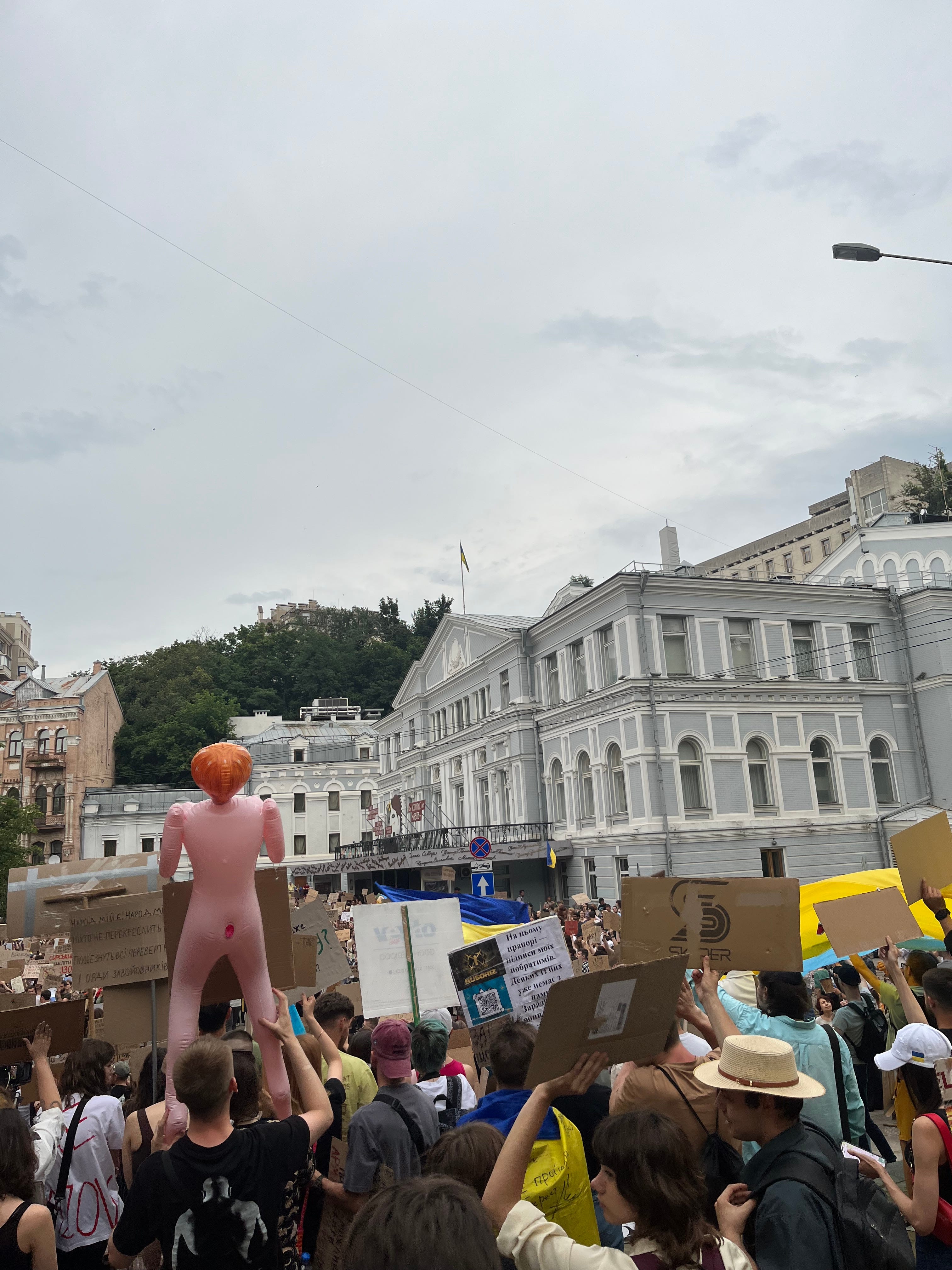
Syrskyi’s dismissal is a huge concession to the protests that had rocked Kyiv and other cities in Ukraine for five straight nights. The protests initially focused on reinstating Fedorov. However, Syrskyi, who Fedorov said on July 16 that he had unsuccessfully lobbied Zelenskyy to fire, became a target of protesters’ ire. Protesters made cardboard signs playing on Syrskyi’s last name, the first part of which is similar to the Ukrainian and Russian word for cheese. Protesters made cardboard Swiss cheese signs, and one protester I saw wore a costume of a mouse.
Fedorov, 35, and Syrskyi, 60, had clashed during the defense minister’s six months in office. Fedorov lobbied for a decentralized structure to the military with drones, unmanned systems, and robotic units on the frontline to bridge Ukraine’s manpower shortage against Russia. Syrskyi, who was educated at a Soviet military academy in Moscow and speaks Russian, favored a centralized, Soviet-style command structure with more recruits risking their lives on the frontline.
Syrskyi came to symbolize the problems associated with mobilization: lacking willing recruits in the fifth year of the full-scale invasion, many Ukrainians fear that inexperienced men are being picked up off the street for dangerous missions on the frontlines. On June 23, the Ukrainian news outlet Babel.ua published a lengthy investigation into an assault regiment that had expanded under Syrskyi’s tenure, known as Skelia. The outlet reported that the unit had mobilized marginalized men, including those with addiction problems, and there had been at least 26 noncombat deaths and multiple cases of abuses and torture at the unit’s training centers. (Authorities later announced an investigation into the allegations; Syrskyi said that he supported it.)
As protests grew, a video surfaced online of two soldiers in the contested town of Kostiantynivka supporting Syrskyi with Ukraine’s flag. The news outlet Ukrainska Pravda and a prominent military volunteer and Fedorov supporter, Serhii Sternenko, reported that brigades were ordered to record videos in support — Sternenko added that those who refused were punished. Later on the same day, Russia’s ministry of defense posted a video with the same men holding the Russian flag, proclaiming support for Russia’s generals. Skelia confirmed that the men were captured, but did not say what everyone was thinking: whether the first video in support of Syrskyi was connected to their capture by the Russians.
It is not yet clear whether Syrskyi’s firing will be enough for the protesters. The organizer of the protests, Dmytro Koziatynskyi, a veteran and former combat medic, has demanded both Syrskyi’s ouster and Fedorov’s reinstatement. Koziatynskyi paused protests until July 24 to give time to Zelenskyy to meet the demands. Zelenskyy is betting that one scalp will be enough; he has made acting Security Service of Ukraine (SBU) chief Yevhen Khmara acting defense minister, and supports him being confirmed by parliament for the full job. Fedorov, meanwhile, praised Syrskyi’s firing, but has not accepted Zelenskyy’s offer to be a special adviser for advanced military technologies. He has made clear that he will only return to his old job, because he believes that only from that post that he will have the authority to finish implementing his reforms. Zelenskyy and Fedorov remain at loggerheads.
I left Kyiv on July 20 after reporting and visiting friends, but I wanted to convey to paying readers what being on the ground for one of the largest barrages of ballistic missiles launched at Kyiv since the full-scale war began in 2022 was like, early on the morning of July 19.
