

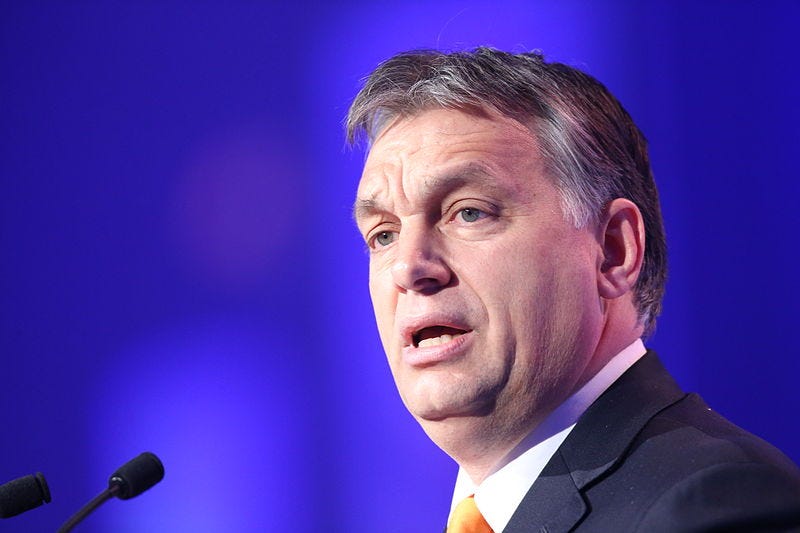
On February 1, EU leaders unanimously approved an additional 50 billion Euros ($54 billion) in aid to Ukraine, after Hungarian Prime Minister Viktor Orban sought to block the deal at the end of 2023. Orban had wanted an annual veto on Ukraine aid; instead, he settled for an annual review of Ukraine funds. It wasn't immediately clear what Orban got; at this point, it looks like a significant win for Ukraine and a defeat for Orban.
The aid, a mixture of grants and loans, supports Ukraine's economy through 2027 as its GDP and tax revenue have plummeted during the full-scale war. Kyiv is relying on U.S. and European aid to plug over half of its 2024 budget deficit of $43 billion. All of its diminished domestic tax revenue is allocated for defense spending. Meanwhile, Ukraine still needs to pay salaries, pensions, and social benefits, which the EU aid covers.
