Trump's Dangerous War for Regime Change in Iran
There is no precedent for triggering a popular uprising by foreign airpower alone

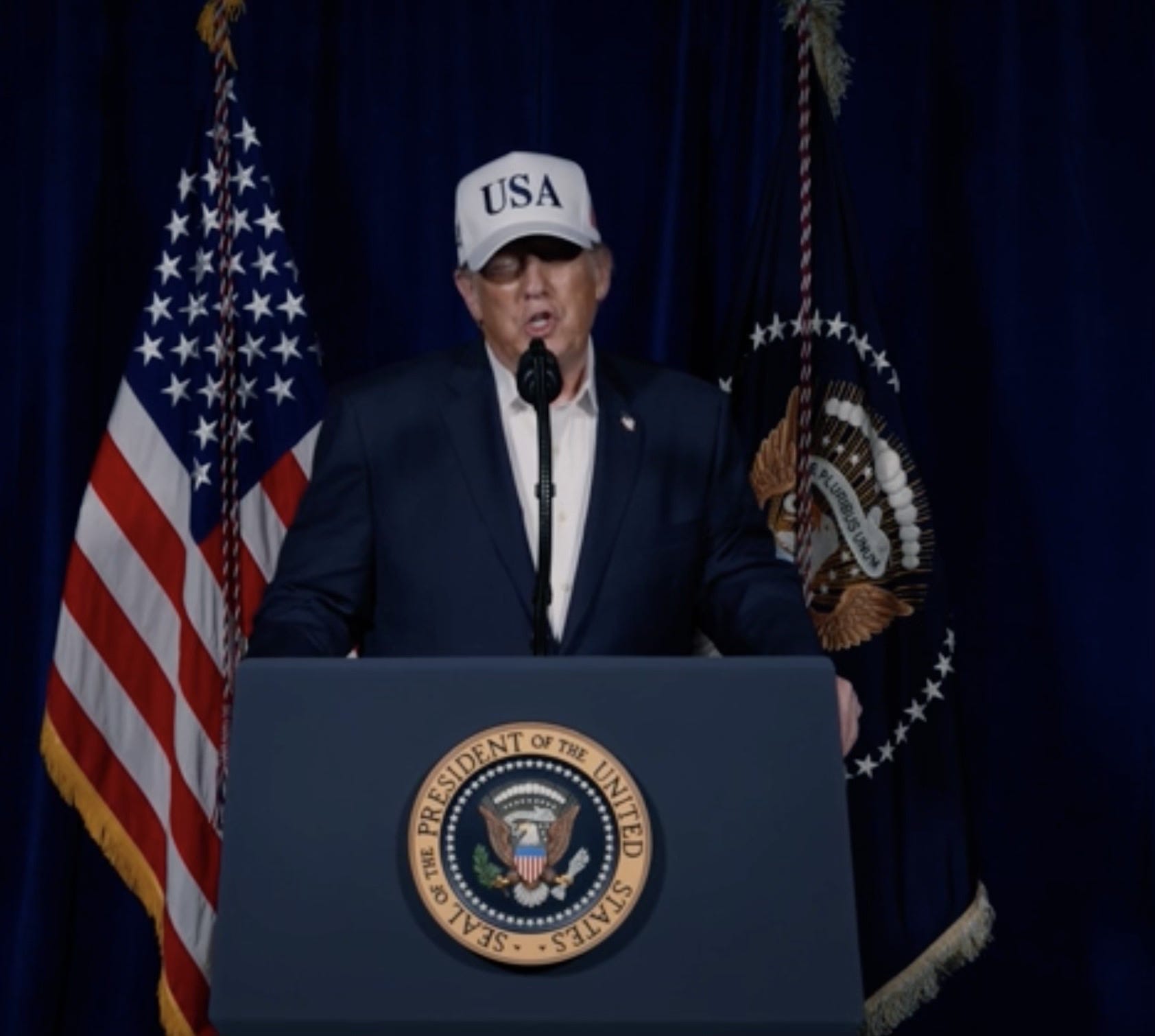
On February 28, U.S. President Donald Trump announced a joint military attack with Israel against Iran with the goal of devastating its military, eliminating its nuclear program and overthrowing the regime in Tehran. In an eight-minute video, Trump urged Iran’s people to “take over your government” after the strikes end. “For many years, you have asked for America’s help, but you never got it,” Trump said. “No president was willing to do what I am willing to do tonight. Now you have a president who is giving you what you want, so let’s see how you respond. America is backing you with overwhelming strength and devastating force.”
Trump’s goal seems to be to use U.S. and Israeli airpower alone -- there was no mention of U.S. ground troops -- to trigger a popular uprising to bring down a regime that has been in power for nearly 50 years and rules over some 92 million people. This seems like a fanciful and dangerous plan that is likeliest to result in a hardline military government.
There’s no question that Iran’s government has been significantly weakened in recent months by U.S. and Israeli strikes on its nuclear program, economic collapse, and popular unrest opposing the theocratic, brutal, and misogynist regime. Earlier this year, Iran’s people protested en masse against the regime, only to be met by the government killing an estimated tens of thousands of people. Yet, the largest armed force in the country is the regime’s hardline Islamic Revolutionary Guard Corps (IRGC), possessing some 200,000 members and a vast, sophisticated arsenal of weapons.
Trump’s bombing is aimed at degrading their capabilities, yet airpower alone has limits. Trump promised the IRGC “total immunity” if it lays down its weapons. However, since there are no ground troops, there is nobody for them to surrender to, take them as prisoners, and implement the promised immunity. While it’s possible that this is just an attempt to sow confusion among the corps, it looks more like an empty promise, similar to Trump saying last month to Iran’s protesters that “help is on the way” for only thousands of them to be subsequently killed by the regime.
Meanwhile, the political opposition to the regime is fragmented and operates mostly outside of the country. It’s not clear who Washington would back in place of Iran’s theocrats. Trump has declined to meet with Reza Pahlavi, the son of the last shah of Iran, who has been touting himself as a possible successor.
Thus, the likeliest scenario seems to be some sort of military government led by remaining IRGC forces, who will be prepared to use unlimited force and brutality to stay in power. It’s unclear how Trump would respond to this, but the likeliest outcome would seem to be more escalation, which will further endanger the region: Bahrain, Qatar, Kuwait, Jordan and the United Arab Emirates -- which have U.S. military bases -- have already faced retaliatory strikes from Iran in the hours following the attack. Israel has also faced counterattacks. (Earlier this month, I spoke with Middle East journalist Jo-Ann Mort about the consequences for Israeli civilians of an attack on Iran.)
U.S. Vice President JD Vance, speaking on February 26 to the Washington Post aboard Air Force Two, promised that the U.S. would not be drawn into a wider war: “the idea that we’re going to be in a Middle Eastern war for years with no end in sight — there is no chance that will happen.” Yet, Trump’s military intervention against Iran -- launched with virtually no public discussion or congressional approval and false justifications of Tehran allegedly posing “imminent threats” to the American people -- seems like it could trigger the kind of long Middle Eastern war that he campaigned against.
In 2003, the Bush Administration overthrew Iraqi dictator Saddam Hussein with hundreds of thousands of U.S. and allied troops, resulting in the deaths of over 4,000 Americans and hundreds of thousands of Iraqis, only for a pro-Iranian government to take over. Iran is also not Venezuela, where U.S. forces last month were able to quickly capture Venezuelan dictator Nicholas Maduro and a more pliant leader, Delcy Rodriguez, took power. Trump’s military intervention in Iran seems likely to lead to something protracted, deadly, and unpredictable -- and we are only in the opening hours of it.
You are reading Public Sphere, an independent publication which is 100% funded by readers just like you who choose to become paid subscribers. I do not have a paywall today. You can read this site for a week or a month or six months, to see if you like it. If you do—if you think this is a worthwhile place, and you would like to help it survive—I ask that you take a moment to become a paid subscriber yourself.
If you found this post useful, you can use the buttons below to share it:


