
Too Big to Rig
Hungary's lessons for the U.S. midterms

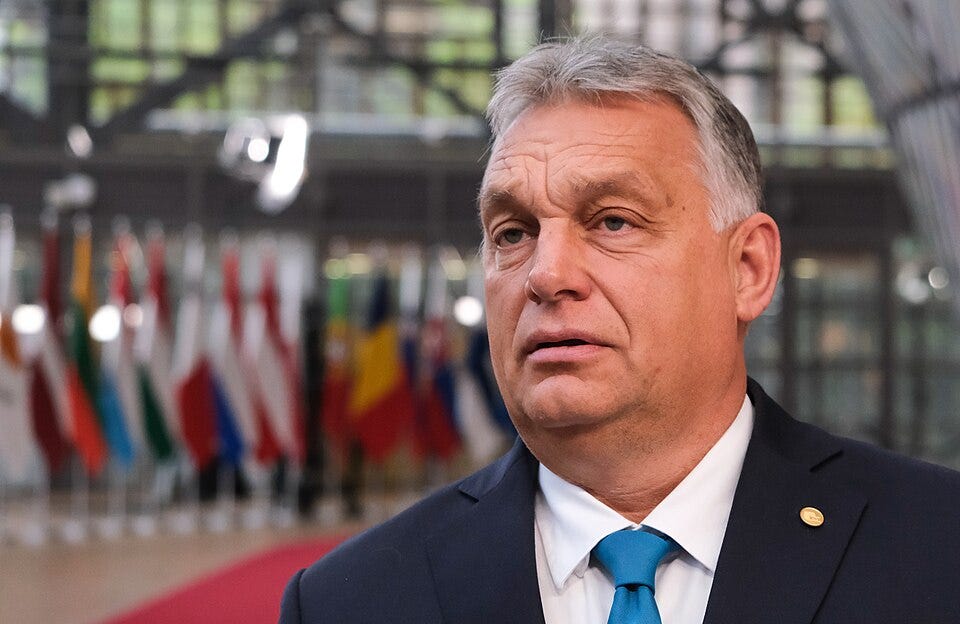
Hungarian Prime Minister Viktor Orbán’s ouster after 16 years in power is a political earthquake. Much as Cuba’s Fidel Castro did for communism, Orbán punched above his weight in the global far-right movement, becoming a template for how an authoritarian leader could hollow out a democracy from within by changing election rules, manipulating the independent judiciary, and controlling the media.
His rule has come to an end. The results of April 12 elections show Orbán’s party, Fidesz, on track to win just 55 out of 199 seats in parliament, a massive loss from the 135 it currently holds. The Tisza Party and its leader Petér Magyar are on track to secure a two-thirds majority, meaning that it can undo the constitutional changes which Orbán made to weaken checks and balances. Fidesz won just 37% of the popular vote to Tisza’s 53%, and lost much of its rural, conservative base.
Before the election, Orbán had set the stage for a rigged election. He claimed a campaign of Ukrainian election interference, wherein his rival, Magyar, had been in cahoots with Ukrainian President Voldoymyr Zelenskyy to oust his government with a new slate of leaders that would be friendlier to Kyiv, putting Hungary at risk of getting drawn into a war with Russia. Zelenskyy, who is Jewish, had largely replaced the erstwhile enemy of the Orbán government, billionaire George Soros, who also happens to be Jewish.
This campaign was a psychological projection on the part of Fidesz: Orbán’s party had been getting assistance from Moscow -- which was not very secret -- even with Russians proposing to stage a fake assassination against the Hungarian leader. However, a few days before the election, Russian government sources told Meduza that even they couldn’t save Fidesz from defeat, with one telling the Latvia-based news portal: “Even with our help, they couldn’t accomplish anything.”
On election night, some observers expressed surprise that Orbán conceded defeat early and did not try to steal the election. One reading of the concession — espoused by far-right French politician Marine Le Pen, among others — was that Orbán was always more democratic than commonly understood, but this is false: in 16 years in power, he did everything he could to forestall losing. For example, after winning the election fair-and-square in 2010, his party changed the electoral rules so that in 2014, his party won a two-thirds constitutional supermajority with just 45% of the vote.
By contrast, the April 12 results were too big to rig. It is easier to steal a close election than a landslide. Orbán conceded because he had no other choice. Dictators like Nicholas Maduro of Venezuela and Aleksandr Lukashenko of Belarus stole landslide losses in 2024 and 2020, but they only were able to do so with a lot of violence. This option was not available to Orbán, who still governed in the confines of a hollowed-out democracy. It’s impossible to say whether a plot to steal a close election in Hungary -- possibly aided by the Trump Administration and Russia -- would have succeeded, but the loss was too big for him to even attempt.
The Hungarian election has implications for U.S. midterm elections in November, as the Trump Administration has also created a conspiracy theory wherein the opposition will steal the election with foreign help.
