

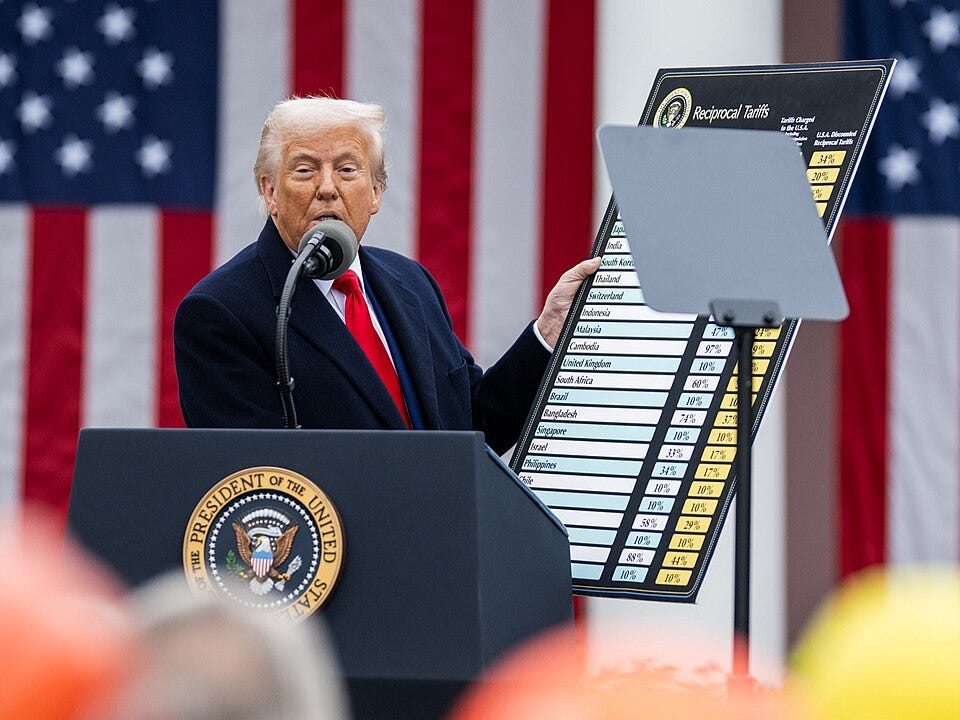
Most of the claims in President Donald Trump’s December 17 prime-time address on the economy were not new. As Factcheck.org wrote, “Trump’s speech contained a number of inaccurate or misleading claims, many of which he has repeated in public speeches for months.” What was notable about the address was the fact that he felt he needed to speak about the economy at all.
Many aspiring strongmen try to strike an implicit deal with their populations. Leaders create an economic boom, and in return, citizens stay out of politics as the leader consolidates power and cracks down on opponents. There are numerous examples of this in history, including Nazi Germany’s building boom in the 1930s and the rise of China in the 1990s. The early years of Vladimir Putin’s Russia saw a rise in economic growth after the depression of the 1990s; as a student living in Russia during that time, I met many people who were so grateful for his economic stewardship that they didn’t care much about declining political freedoms.
Trump can’t strike this deal because Americans think he isn’t handling the economy well. He won the 2024 election based on a promise to rein in inflation; prices have risen, and economists think this is largely because of his tariff policies. The damage from tariffs has been less of an immediate shock and more of the death-by-a-thousand-cuts variety like Brexit; companies are hiring and investing a little less and raising prices a little more and wages a little less. A recent NPR/PBS News/Marist poll found that just 36 percent of Americans approve of his handling of the economy. According to Gallup, his broader approval ratings are also at 36 percent, down 11 points since the beginning of his second term. As was the case with his predecessor, Joe Biden, no amount of loudly telling people that the economy is getting better will actually convince people that the economy is getting better.
The central difference between Trump and other authoritarian-minded leaders who consolidate power is that he isn’t popular. Putin and Turkish President Recep Tayyip Erdoğan were able to create enduring authoritarian systems precisely because their early years aroused little opposition and many of their opponents only started to gather steam after they had too much power.
