

Much of the news coverage surrounding President Donald Trump’s pardon of former Honduran President Juan Orlando Hernandez has focused on its hypocrisy. Indeed, Trump has portrayed drug trafficking as a grave threat to the U.S. Yet, after the former president cast himself in a fawning letter to Trump as a victim of “political persecution” by the Biden Administration, Trump pardoned Hernandez, who was freed from serving a 45-year prison sentence for a conspiracy to import 400 tons of cocaine into the U.S. But the pardon is also a case of Trump standing up for a fellow strongman who faced legal accountability after leaving office.
In 2017, Hernandez narrowly won reelection after Honduras’ Supreme Court voided a section of the constitution that forbade presidents from running again. According to the Organization of American States, the vote “was characterized by irregularities and deficiencies, with very low technical quality.” The OAS called for new elections, which didn’t happen. According to Freedom House, Hernandez’s government used force to disperse peaceful protests and he appointed members of the military to civilian positions. After he left office in early 2022, the U.S. announced his visa had been revoked because of his involvement in drug trafficking; he was extradited to the U.S. where he was convicted last year on three counts of drug trafficking and weapons conspiracy.
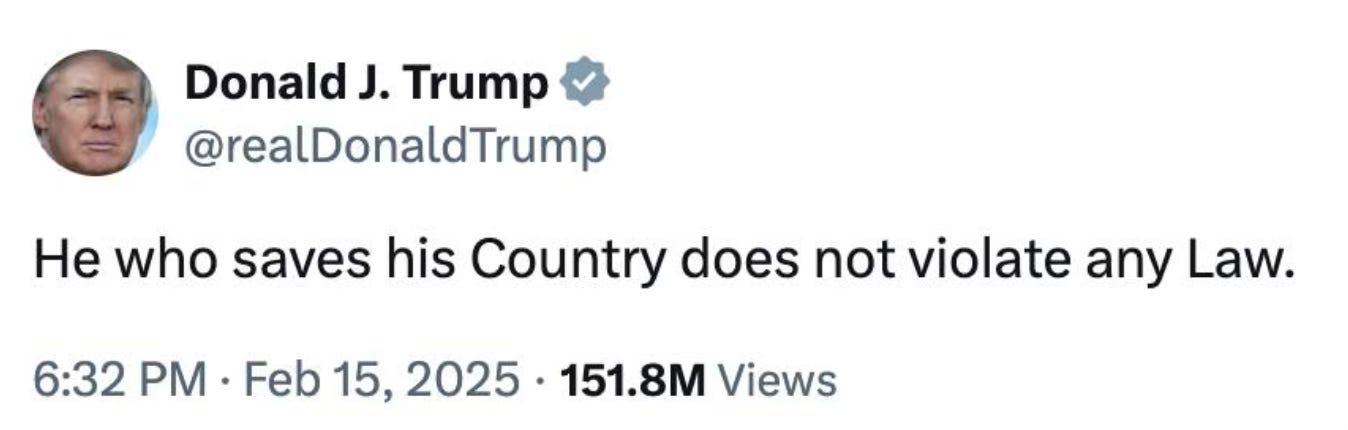
Trump has not criticized the specifics of the case, but rather disapproved of the very idea that a former president can be held accountable. “You can take any country you want, if somebody sells drugs in that country, that doesn’t mean you arrest the president and put him in jail for the rest of his life,” he told reporters on Air Force One on November 30. He further criticized the prosecution as a “Biden setup,” which is ironic considering that much of the investigation happened during his first term and one of the lead investigators in the U.S. case was Emil Bove III, who later became a personal lawyer for Trump and whom he nominated to be a circuit judge of the United States Court of Appeals.
The idea that chief executives have no accountability once they leave office is central to authoritarianism. Authoritarians ruling in democratic systems often commit crimes in inciting violence, engaging in corruption, and suppressing civil liberties. Ruth Ben-Ghiat, an NYU professor and expert on authoritarianism, wrote in her newsletter Lucid last May, “Authoritarianism involves arranging government to keep the leader and his cronies safe from prosecution and allow them to commit crimes and corrupt acts with impunity.”
